
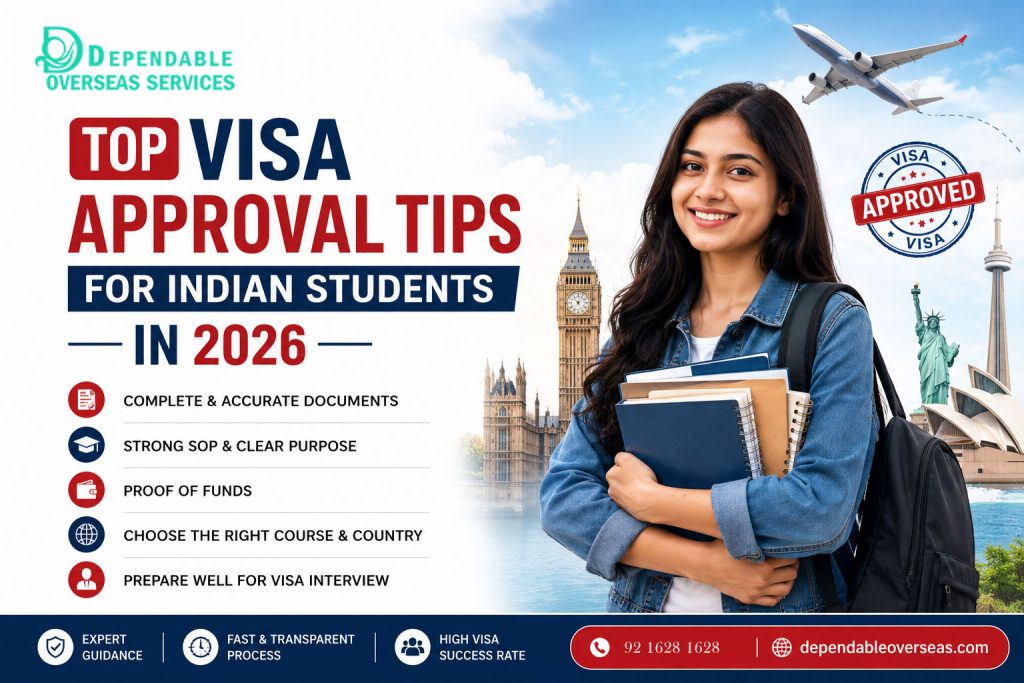
Studying abroad is an exciting goal for many Indian students. However, getting a student visa requires proper planning, honest information, and complete documents. A strong university offer alone does not guarantee visa approval.
Here are the top visa approval tips for Indian students in 2026.
1. Choose the Right Course
Your course should match your previous education, skills, and career plans.
For example, if you have studied computer science, applying for a related programme such as data science, cybersecurity, or software engineering may be easier to explain. If you choose a completely different course, be ready to clearly explain the reason.
Before applying, understand:
– The subjects included in the course.
– The course duration and fee.
– The career opportunities after graduation.
– Why you selected this country and university.
– Why the course is useful for your future.
Visa officers may check whether your study plan is genuine and logical.
2. Prepare a Clear Study Plan
Your study plan should answer three important questions:
1. Why do you want to study this course?
2. Why did you choose this university and country?
3. How will the course help your career?
Keep your answers simple and truthful. Do not memorise complicated answers from the internet. Your explanation should match your academic background, work experience, financial documents, and future plans.
For Australia, the Genuine Student requirement checks whether studying is the main reason for applying. Applicants may need to explain their current situation, course choice, education provider, career benefits, family ties, and financial circumstances. Supporting evidence is given more importance than unsupported statements. [immi.homeaffairs.gov](https://immi.homeaffairs.gov.au/visas/getting-a-visa/visa-listing/student-500/genuine-student-requirement)
## 3. Show Strong Financial Proof
Financial preparation is one of the most important parts of a student visa application. You must show that you can pay for your tuition fees, living costs, travel, and other expenses without depending on illegal or uncertain work.
Useful financial documents may include:
– Recent bank statements.
– Education loan sanction letters.
– Scholarship letters.
– Income-tax returns of parents or sponsors.
– Salary slips and employment letters.
– Business registration and income documents.
– Property or investment documents, where relevant.
– Proof of relationship with your sponsor.
– A clear explanation for any large bank deposit.
The money shown in your account should have a genuine and explainable source. Avoid depositing a large amount suddenly without proper proof.
For Canada, applicants must show funds for the first year of study and explain how they will pay for the remaining years of a longer programme. Canadian authorities may accept documents such as bank statements, education loans, scholarships, and proof of paid tuition, depending on the case. [canada](https://www.canada.ca/en/immigration-refugees-citizenship/services/study-canada/study-permit/get-documents/financial-support.html)
For the UK, students must show money for unpaid course fees and living costs. The current UK guidance also requires the funds to be held for 28 continuous days, with the latest financial evidence generally dated no more than 31 days before the application. [gov](https://www.gov.uk/guidance/financial-evidence-for-student-and-child-student-route-applicants)
4. Keep Your Documents Consistent
All information in your application must match.
Check that the following details are the same across your documents:
– Name and date of birth.
– Academic history.
– Work experience.
– Course name and duration.
– Tuition fee amount.
– Sponsor’s name and relationship.
– Bank balance and source of funds.
– Travel and visa history.
For example, if your application says your father is sponsoring you, your financial documents should support your father’s income and ability to pay. If there is a gap in your education, explain it honestly instead of hiding it.
5. Complete Every Form Carefully
Small mistakes can create serious delays or questions. Review your visa form several times before submitting it.
Pay special attention to:
– Passport details.
– Previous visa refusals.
– Education gaps.
– Employment history.
– Family information.
– Travel history.
– Address and contact details.
– Course and university information.
Never give false information or submit fake documents. A refusal for misrepresentation can affect future visa applications.
For the United States, students must first be accepted by an approved school or programme sponsor before applying for the relevant student or exchange visitor visa. [travel.state](https://travel.state.gov/content/travel/en/us-visas/study.html)
6. Prepare for the Visa Interview
Some countries may require an interview or may ask for additional information during processing. Indian students should prepare short, natural, and honest answers.
Common questions include:
– Why did you choose this course?
– Why did you select this university?
– Why do you want to study in this country?
– Who will pay for your studies?
– What does your sponsor do?
– What are your career plans?
– Why not study the same course in India?
– Do you have relatives abroad?
– Have you applied for a visa before?
Do not give answers that sound memorised. Speak clearly and confidently. If you do not understand a question, politely ask the officer to repeat it.
7. Explain Education Gaps Properly
Education or employment gaps are not always a problem. The important thing is to explain them honestly.
You may have taken a gap for:
– Competitive exam preparation.
– A medical reason.
– Family responsibilities.
– Professional work.
– Skill development.
– An internship or training programme.
– Financial reasons.
Provide supporting documents whenever possible, such as employment letters, medical records, certificates, or training documents.
8. Show English-Language Readiness
Depending on the country, university, and course, you may need to provide an English-language test result such as IELTS, PTE, TOEFL, or another accepted test.
Even when a test score is not required, you should understand your course and be able to communicate comfortably. Your English does not need to be perfect, but your answers should be understandable and relevant.
Before the interview, practise explaining:
– Your previous studies.
– Your selected course.
– Your university.
– Your funding plan.
– Your career goals.
9. Research the University and Country
Visa officers expect students to know basic information about their destination.
Research:
– University location.
– Course structure.
– Tuition fees.
– Accommodation options.
– Living expenses.
– Weather and lifestyle.
– Transport facilities.
– Student support services.
– Visa conditions.
– Work limitations.
Do not say that your main purpose is to work abroad. Your primary purpose must be education. You should also understand and follow all conditions attached to your student visa.
10. Apply Early
Do not wait until the last moment. Start your preparation several months before your planned intake.
A useful timeline is:
– Shortlist universities and courses.
– Take the required English-language test.
– Apply for admission.
– Arrange education funding.
– Collect academic and financial documents.
– Complete medical and biometric requirements.
– Submit the visa application.
– Prepare for the interview, if required.
Applying early gives you time to correct mistakes, arrange missing documents, and handle delays.
11. Check Country-Specific Requirements
Visa rules are different for every country and may change during the year. Always check the latest official requirements before submitting your application.
For example:
– Canada may require documents such as a provincial attestation letter, depending on the applicant and programme.
– The UK checks course fees, living funds, and the reliability of financial evidence.
– Australia assesses whether the applicant is a genuine student and whether the chosen course is suitable.
– The United States requires students to follow the student visa application process after receiving acceptance from an approved institution.
Use official government and university websites for the latest information. Do not depend only on social media posts or old checklists.
12. Avoid Common Mistakes
Avoid these mistakes during your visa process:
– Submitting incomplete documents.
– Showing unexplained money deposits.
– Giving false information.
– Choosing a course without understanding it.
– Depending on part-time work to pay all expenses.
– Giving memorised interview answers.
– Hiding previous visa refusals.
– Ignoring education gaps.
– Using unverified agents.
– Waiting until the final week to apply.
No consultant can guarantee visa approval. The final decision is made by the relevant immigration or consular authority.
Simple Visa Checklist
Before submitting your application, check that you have:
– Valid passport.
– University offer letter or confirmation document.
– Visa application form.
– Academic certificates and transcripts.
– English-language test result, if required.
– Financial documents.
– Education loan or scholarship documents, if applicable.
– Sponsor documents.
– Medical and biometric records, if required.
– Travel and visa history.
– A clear study and career plan.
– Translations of documents, where required.
Getting a student visa in 2026 is possible with proper planning and honest preparation. Indian students should focus on choosing the right course, showing genuine financial support, submitting accurate documents, and explaining their study plans with confidence.
Dependable Overseas encourages students to begin early, verify every requirement, and take professional guidance when needed. A well-prepared application can reduce mistakes and help you present your education goals clearly. Remember, visa approval cannot be guaranteed, but careful preparation can greatly improve the quality of your application.